
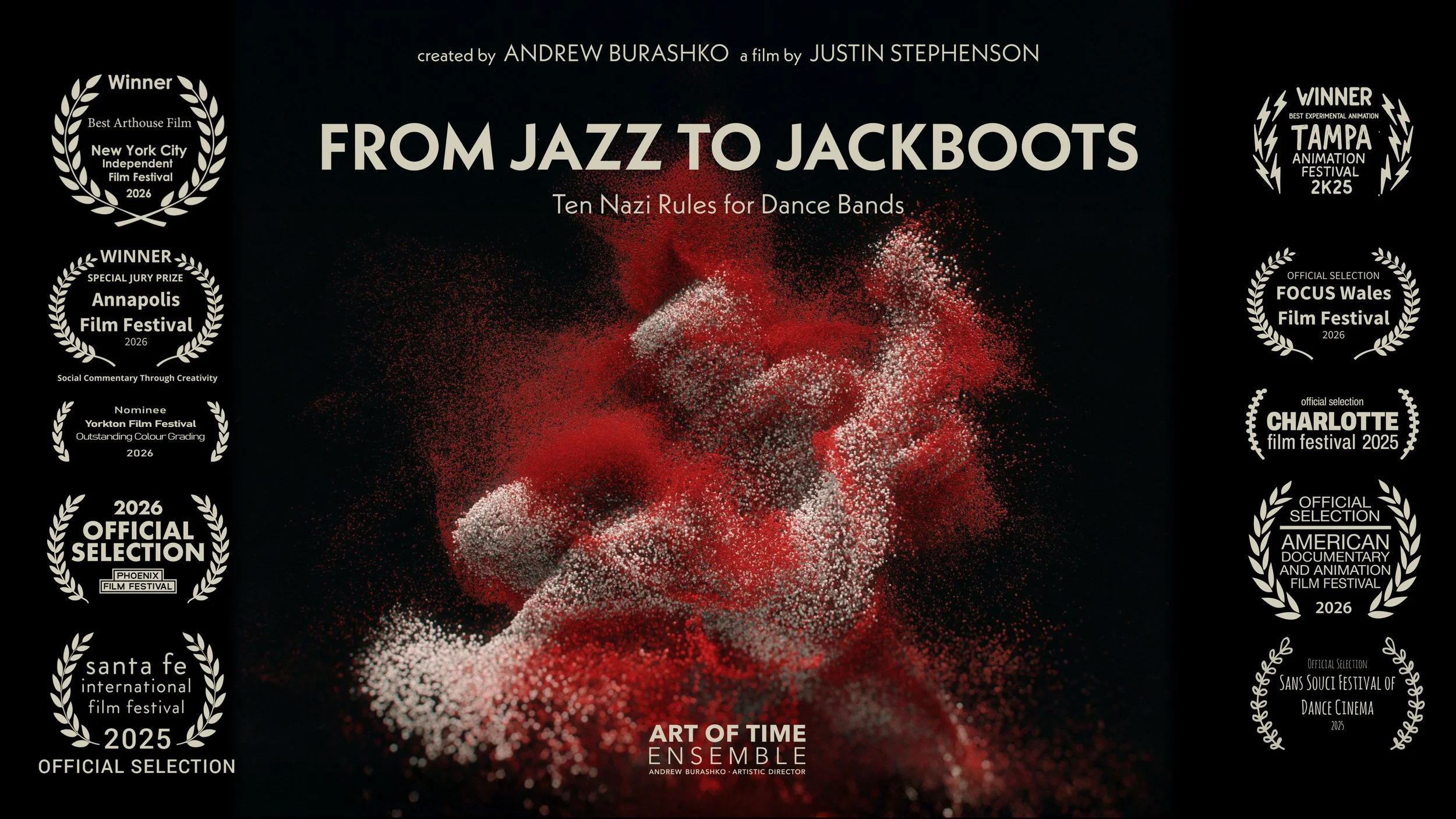
June 8, 2026 - “From Jazz to Jackboots” has won the Jury Prize for Best Arthouse Film at the NYC Independent Film Festival
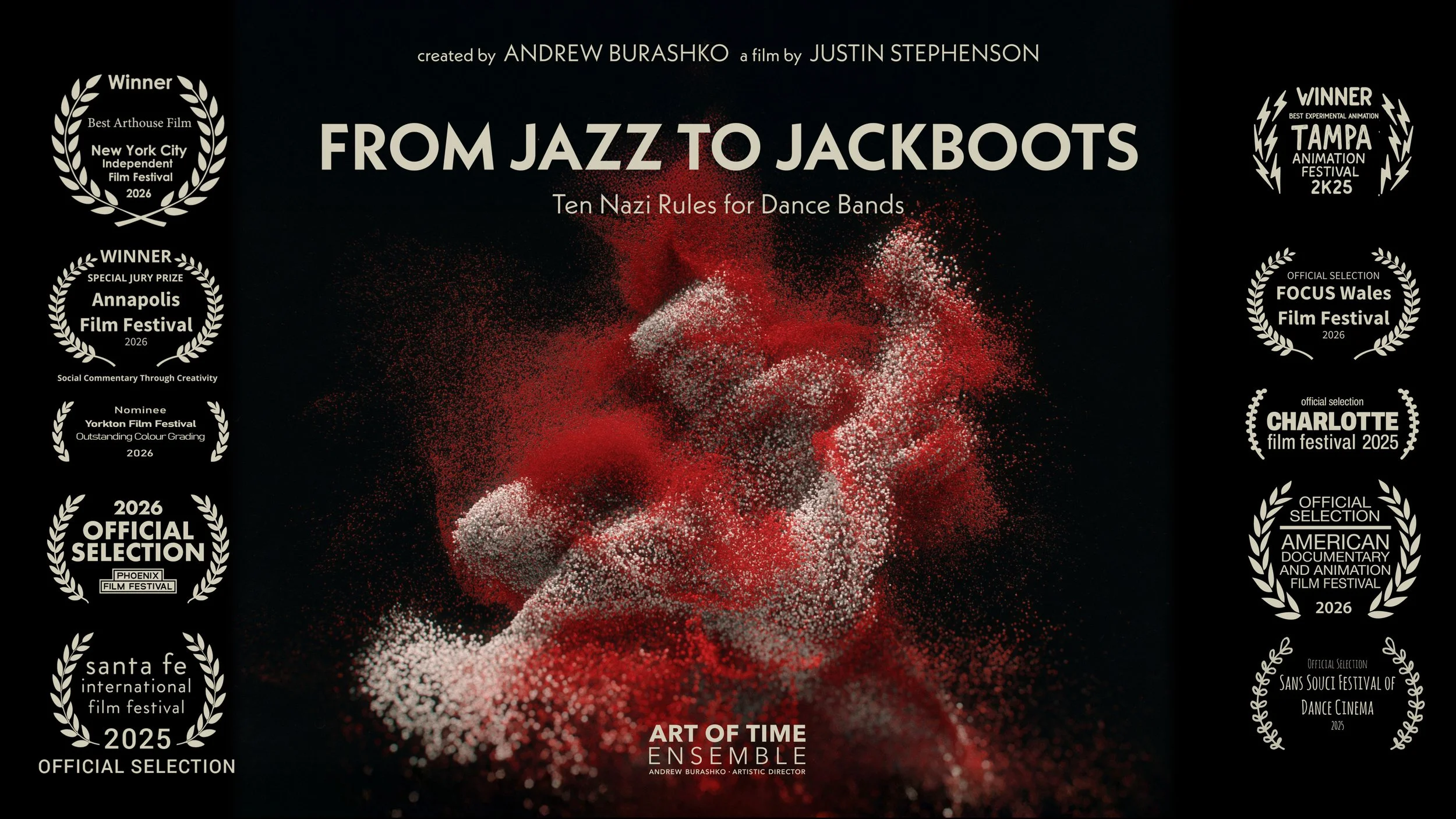
March 29, 2026 - “From Jazz to Jackboots” has won the Special Jury Prize for Creative Social Commentary at the Annapolis Film Festival
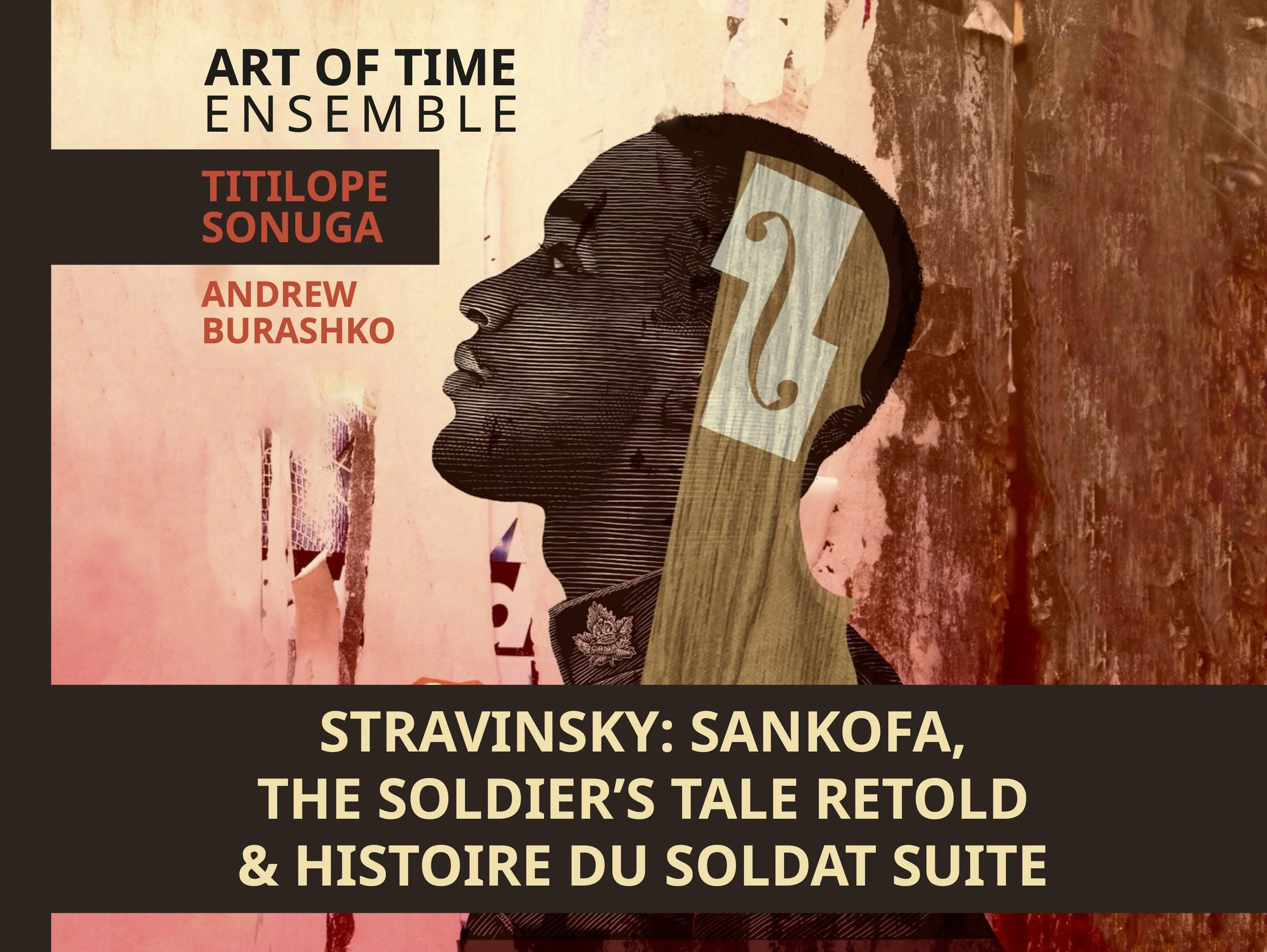
February 6, 2026 - “Stravinsky: Sankofa, The Soldier’s Tale Retold &
Histoire du soldat Suite”, released today on the Leaf Music label
“Igor Stravinsky’s L’Histoire du Soldat (A Soldier’s Tale) is brash, sardonic, rambunctious. It thumbs its nose at the listener while performing somersaults on a tight rope. Rich and relentlessly adventurous, it is complex and modernist yet composed of earthy elements - folk music, marches, chorales and popular dances such as the waltz, ragtime, tango. The music is intricate and tightly knit yet freewheeling - sometimes careening and verging on chaos. From the joyful to the horrific, Stravinsky dares the musicians to perform super human feats at break-neck speeds with the precision of surgeons.
Completed and premiered in 1918 in Lusanne, Switzerland, where Stravinsky was waiting out WWI, this theatrical work was intended to be “read, played and danced” by three actors, one or more dancers and a septet of musicians. The libretto, composed in French by Swiss poet, C.F. Ramuz, was based on a Russian folk tale about a soldier who sells his violin (a metaphor for his soul) to the Devil for riches – a ubiquitous trope explored by Goethe and Marlowe among others. Perhaps because I only knew “L’Histoire” in the English translation, I always found the story disjointed and convoluted, inferior to the music, and for years dreamt of doing something new with it.
Sometime around 2010, I stumbled upon another version of A Soldier’s Tale, written in the 1990s by Kurt Vonnegut, an author who loomed large in my youth. Devoid of magic or fairytale symbolism, Vonnegut’s version was rooted in brutal realism. Having survived the fire-bombing of Dresden as an American POW and outraged that a story about a ‘Soldier’s Tale’ did not address the horrors of war, he wrote a dark story about an American soldier during WWII who was executed for desertion. Upon hearing a recording, I was disappointed to discover that Vonnegut made no effort to tailor his story to the original music and instead, used bits and pieces of Stravinsky’s music as background. But the idea of creating a new A Soldier’s Tale, that made a statement with an important social resonance, was firmly planted in my imagination.
Fast forward to the summer of Covid lockdowns in 2020. A friend sent me a recording by Canadian hip hop artist Shad, titled A Short Story About War – a brilliant album looking at war from manifold perspectives. Although there was no narrative arc to the album, there was a recurring character, an immigrant kid from Toronto, a sniper in the Canadian army. That album was the inspiration to create a new version of Soldier’s Tale about a black soldier in a white army.
It took a couple of years to find the right collaborator. The wait paid off. Librettist Titilope Sonuga is an Edmonton-based, Nigerian-born poet. When I approached her with the idea of creating a new A Soldier’s Tale about a black soldier in the Canadian army, I asked that it be an homage to the original in the following ways: that the libretto be written in rhyming verse; for the same characters of Soldier, Devil and Narrator; that it follow the original structure by having the Devil appear in different guises and that the new libretto make perfect sense with the original music. It was Sonuga’s idea to base it on a fictional soldier from the historical 2nd Construction Battalion during WWI – the only entirely black battalion in the Canadian army – abused by their white officers and relegated to digging ditches because their commanders refused to give them arms. In this version, the soldier encounters the Devil on his way to enlist and relinquishes his identity and heritage (in the form of an amulet of Sankofa given to him by his mother) for the ‘privilege’ of serving in the white man’s war.
I couldn’t be more proud of how we managed to wed this strikingly different tale in such harmony to the original score. Even more importantly, I’m proud to have had a part in bringing this important piece of history to greater light. The classical music world needs more works with social relevance.”
Andrew Burashko